Asphalt Shingle Roofing in Overland Park, KS
You're choosing shingles for an Overland Park home: cost, how long you'll stay, and what Kansas weather does to them.
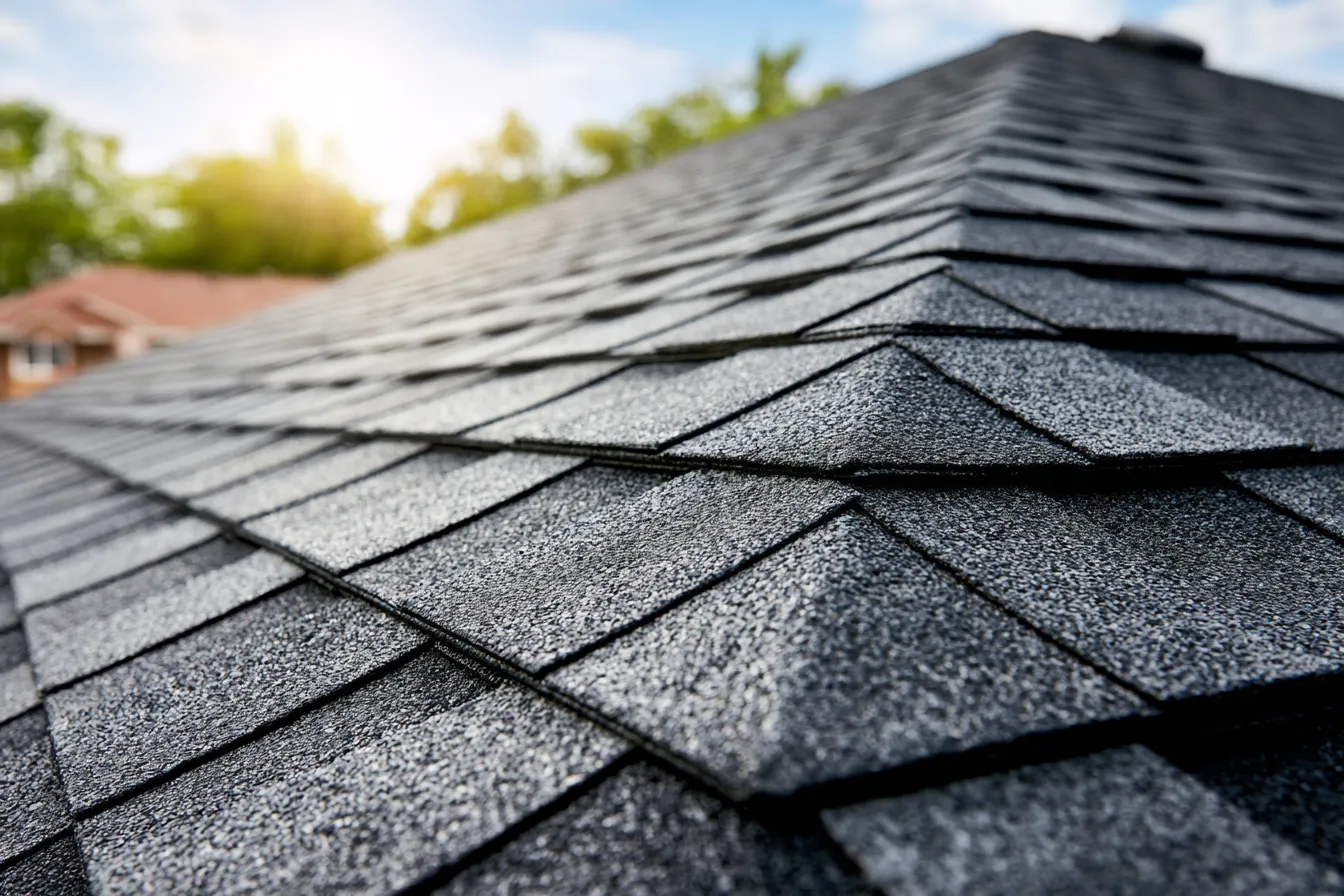
Full asphalt replacement or one more Overland Park repair season
You're weighing one more repair season against a whole new asphalt roof, and Overland Park Summit Roofing can tell you which of the two your house is looking at.
That answer lives in the covering's age more than in anything you can see from the driveway, and it's the same answer in a quiet November as in the week after a hailstorm. Houses on this side of Overland Park mostly went up around 1994, and an asphalt shingle roof runs around 20 years, so plenty of these are on a second covering with years already behind it, which is why whole streets here come due together. Which shingle goes back on is a separate call, and the shingle guide covers that one.
The build-year figure above is the median year built for ZIP code 66213, from the American Community Survey. That is one ZIP, not the whole city.
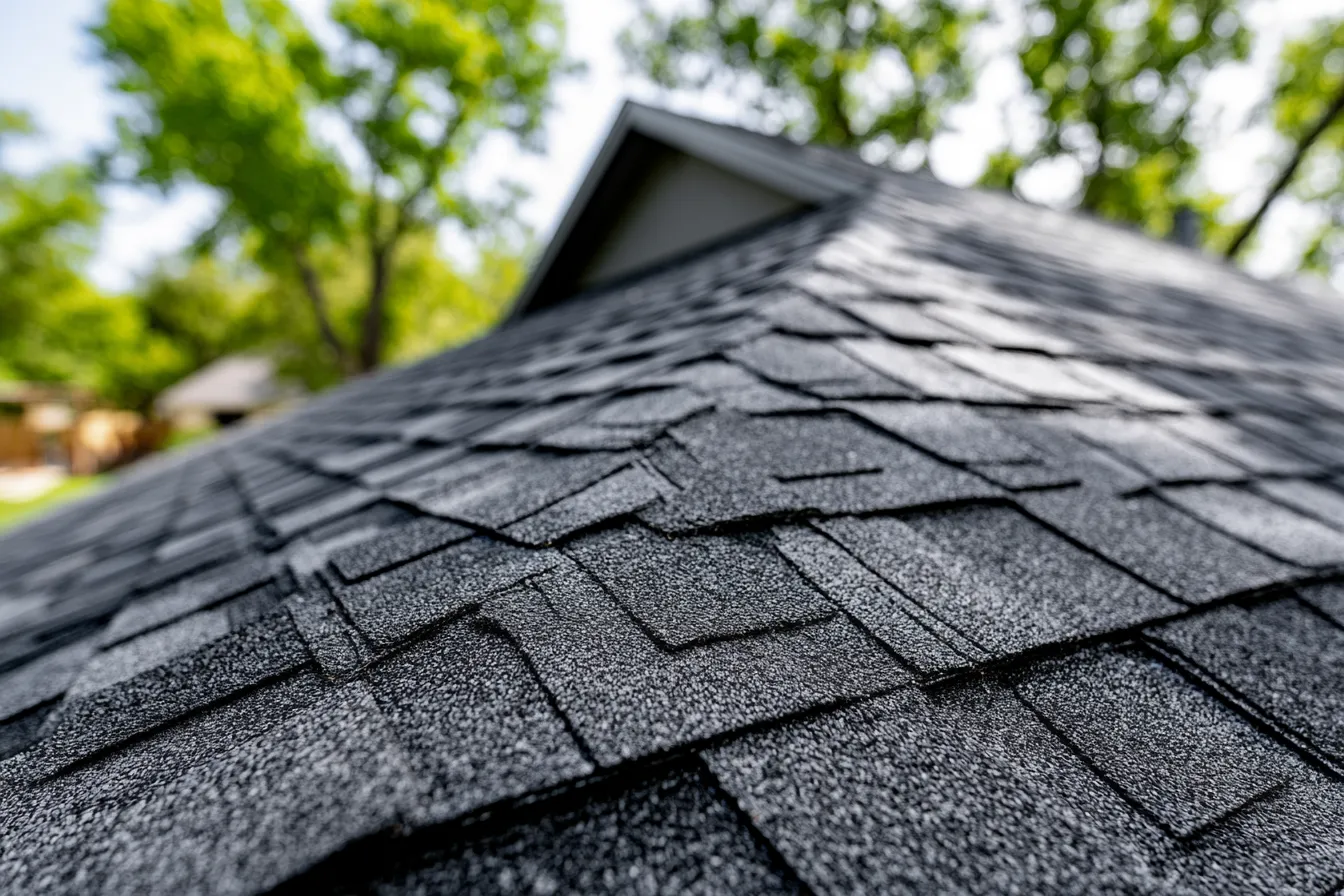
How an Overland Park asphalt roof goes on, starting at the deck
An asphalt roof is a stack, and each layer only works if the one under it was done right. So what you're buying starts at the deck, and the shingle you picked is the last decision on the list.
- ·Tear-off to bare deck
- Everything comes off, fasteners included, and you hear what the wood underneath looks like before anything covers it again. Laying new shingles over an old covering buries that wood where nobody can look at it, and it shortens or voids most material coverage.
- ·Deck repair and re-nail
- Soft or delaminated sheathing comes out by the sheet, and the field goes back down nailed to spec. It's the one line nobody can price from the ground, so the rate for it belongs on your estimate before the first bundle moves.
- ·Ice-and-water membrane, then synthetic underlayment across the field
- The membrane goes down first at the eaves and up every valley, where a melt-and-refreeze cycle drives water uphill under the shingles, and code in this climate calls for it. Synthetic underlayment covers the rest of the deck behind it, and the house is closed to weather before the first shingle goes on.
- ·Starter course and drip edge
- Drip edge at the eaves and rakes throws water into the gutter instead of behind it, and the starter course gives the first row something to seal to. Both are cheap to skip and expensive to add later, and drip edge is one of the few parts of a finished roof you can check yourself from the ground.
- ·Field shingles to the maker's nailing pattern
- Nail count, placement and exposure are all written by the shingle maker, and a nail set an inch too high is the difference between a roof that holds its wind rating and one that doesn't. Every one of those nails disappears under the next course, so nobody can check the fastening afterwards.
- ·Ridge vent and cap
- Exhaust at the ridge with intake at the soffits keeps the attic from cooking your shingles from underneath, and that failure never shows from the street. Ventilation is also a condition of most material coverage, so it's a poor place to save money.
None of that order is negotiable, and none of it shows once the roof's finished, so the estimate names each layer while you can still check it.
Third repair or first replacement is where the money stops working
No single one of these settles it, and no roof fails on a birthday. What moves the answer is how many of them are true on the same roof in the same season.
- The black mat is showing through: granules are the wear surface, and where they're gone the asphalt underneath has nothing left protecting it from the sun.
- A lifted corner cracks instead of bending: brittleness arrives across a whole plane at once, so there's no small version of that repair.
- The deck gives underfoot: sheathing that's been wet is carpentry on top of roofing, and it changes which of your two answers is cheaper.
- You've paid for the same slope in two different springs: a covering that keeps opening somewhere new is talking about its age more than about one bad detail.
- The upstairs runs hot and the attic smells damp: heat and moisture trapped under the deck age a shingle from below, and nothing done on top slows that down.
- A repair bill approaching a quarter to a third of a replacement: at that ratio the repair stops paying for itself.
Taken alone, each of these is fixable work. Three of them together is a covering at the end of its life, and that's the point where a new roof costs less per year than keeping the old one alive. Plenty of roofs showing one or two turn out to have seasons left in them, and our roofer says so when that's the answer. An inspection tells you which one you have.
Cheapest square, lowest total, and what moves an Overland Park asphalt price
Two houses the same size can still sit thousands apart once pitch, layers and access get counted in, so the brackets here are for budgeting and the figure for your own roof comes off the roof itself.
Compare roofing materials- A whole roof of 24 squares, about 2,400 square feet of roof surface, lands about $11,040 to $18,480 in architectural asphalt across the Kansas City metro.
- Per square, and a square covers a hundred square feet, architectural runs about $460 to $770 and Class 4 impact-rated about $570 to $880, both on that same Kansas City metro basis. Class 4 is the version built to take hail without losing its mat.
- Labor is roughly half to sixty percent of the total, so how hard your roof is to walk moves the price more than the shingle you pick does. A steep roof, a cut-up one with a lot of penetrations, and a second covering to strip all push toward the top.
- Deck repair: nobody can count bad sheathing from the driveway, so a fair estimate names its per-sheet rate up front and the surprise turns up with a price already on it.
Same shingle and two different installs change what you sign
Two of these cover the days the work is on your house, and two cover the choices that decide what the final number looks like. The warranty guide goes through the two coverage documents that come with a finished roof.
How long does an asphalt roof replacement take?
Do I need to be home while the work happens?
What happens if the deck turns out to be rotten?
Can the new shingles go over the old roof?
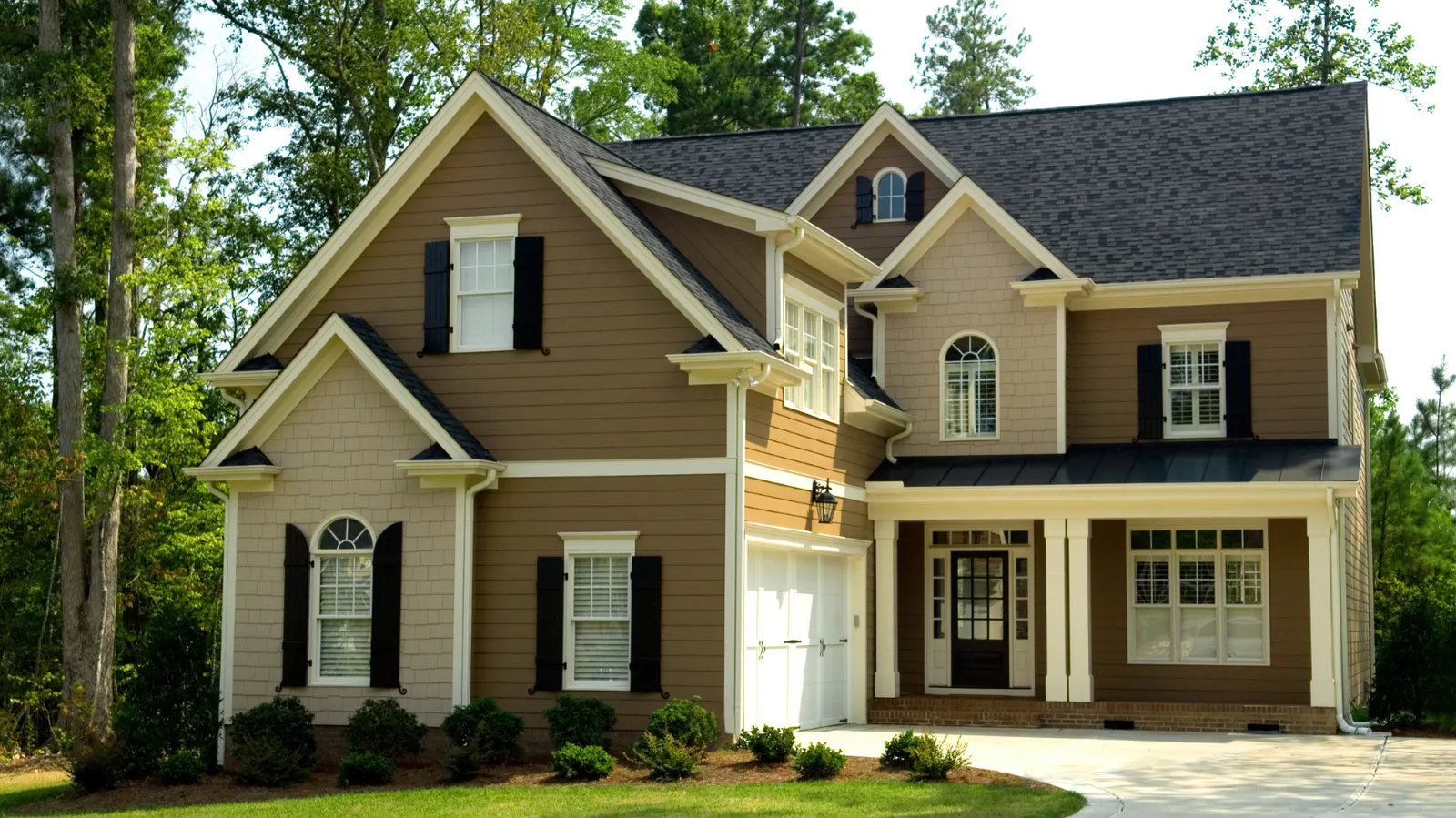
A free estimate on your asphalt roof, and it's yours to keep
What comes back is your own roof in photographs, so the granule loss, the flashing and anything soft in the deck sit beside the number instead of behind it. Our roofer prices it off the roof itself. Then it's yours to hold on to for as long as you want to think about it.
Prefer to talk? Call now: (913) 210-3890
Every figure here brackets the whole Kansas City metro. What one costs on your house comes from its pitch, its layers and the deck under them.
A roofer working in Johnson County measures it and prices it.