Hail Damage Roof Repair in Overland Park, KS
Hail rarely punctures a roof. The damage is lost granules and exposed mat, and that's what the repair fixes.

Hail damage on an Overland Park roof, up close
Overland Park Summit Roofing tells you the same thing in a storm week as in a quiet one: a hail bruise and a ladder scuff can look the same on a shingle, and only one of them has a fractured mat underneath.
The gap between the storm and the leak is what trips people up. A bruised mat sheds water for a while, then the bare patches bake, the fracture works open, and a stain turns up on a bedroom ceiling two or three seasons on, with the storm long off everybody's calendar. We're on your side of that gap, and it's far easier to be useful to you while the bruising is still fresh.
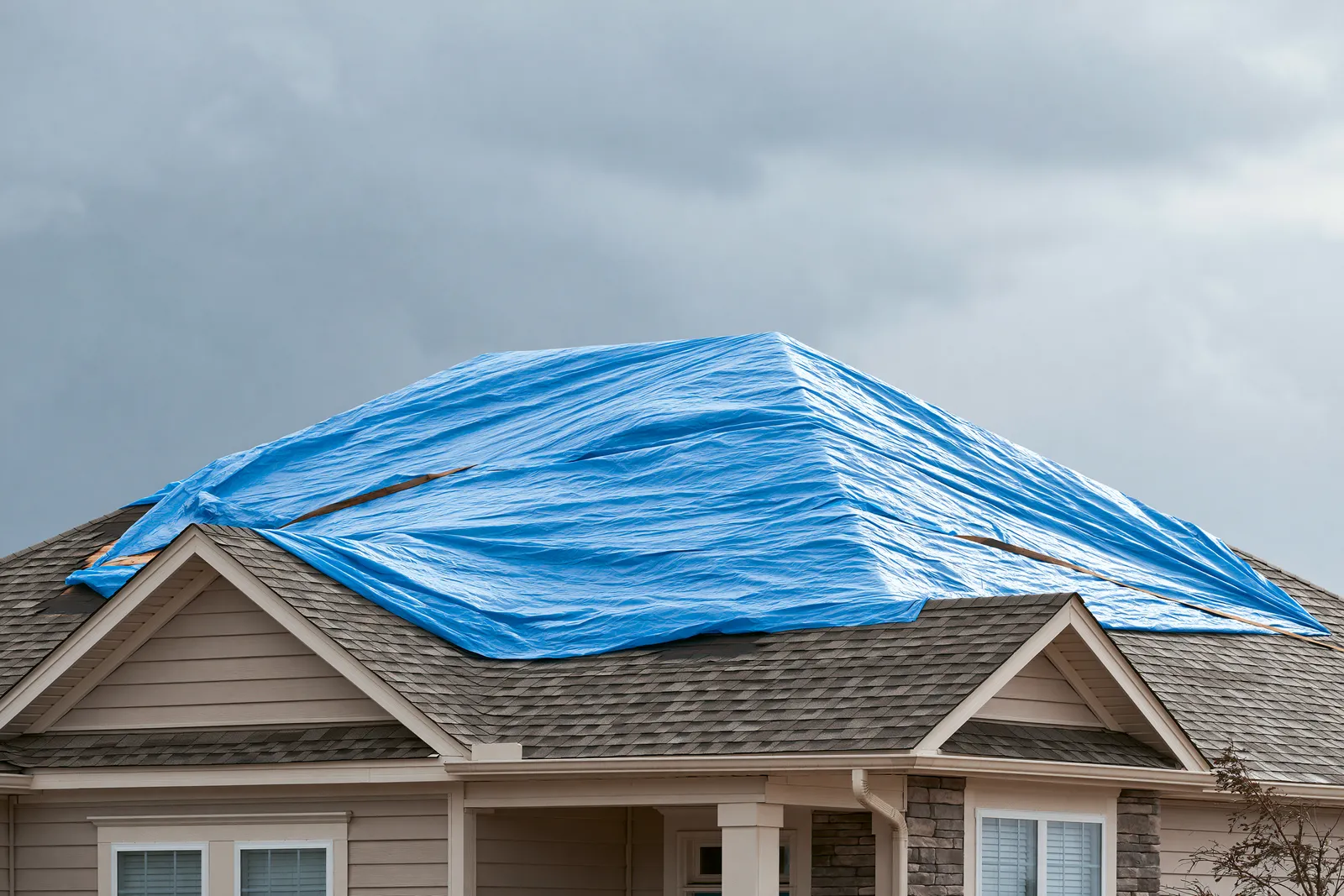
What gets checked after a storm
Hail lands everywhere at once, so a hail inspection covers the whole roof instead of hunting one failure point. Four things carry the answer, they don't all say the same thing, and the last one is the one people skip.
- ·A bruise you can only feel
- A hailstone compresses the shingle and fractures the fiberglass mat under the surface, so the shingle's top can still look perfect. What separates it from a manufacturing blemish is that it yields under firm pressure, the way bruised fruit does.
- ·Granule loss that reaches the mat
- Scattered granules are ordinary wear, and on their own they don't mean much. What matters is loss that bares the black asphalt underneath, because bare asphalt bakes in the sun and gives up years the shingle was built to have.
- ·The soft metal, read as a size gauge
- Gutters, downspouts, vent hoods and an air-conditioning unit's fins dent at a smaller stone than a shingle needs to bruise. They date the strike and they size it, so the metal comes first.
- ·Marks that are not hail at all
- Foot traffic, a dragged ladder, blistering from moisture in the mat and factory blemishes all leave marks a glance calls hail. Hail hits are round, random and spread across a slope; a scuff runs in a line, and blisters cluster with no impact under them. Wind leaves marks of its own, covered under storm damage.
Density decides as much as any single mark. Adjusters commonly look for something like seven to ten hits inside a ten-foot test square before they call a slope, and that number isn't the same at every carrier, so the count and the pattern go on the record beside the photographs.
Documented plane by plane, before money is discussed
Hail leaves marks that are easy to walk past, so the pass is slow and photographs carry most of the record. A hail walk runs longer than a leak call for exactly that reason, and nobody's hurrying it to fit a schedule.
You say what you saw
The storm date if you have one, the rooms you've already looked at, and whatever the gutters and the yard are showing. Nothing about this asks you onto a ladder.
The soft metal reads first, then the slopes
Gutters, vent hoods and the condenser's fins size the stone before anybody looks at a shingle. Then each plane takes its own pass, the open field first and the edges after.
Every mark gets a date
Where each hit sits, which plane it's on, and the day the picture was taken. Within a season or two a bruise stops looking like a storm and starts looking like the roof's own age, and a dated frame is what stops that from costing you anything.
What happens next is yours
A repair, a new roof, a claim, or nothing at all. The estimate names two separate coverages before you sign anything: the workmanship guarantee our roofer stands behind, and the material guarantee that comes from the shingle's maker.
Damage you cannot see from the driveway
The roof itself gives up almost nothing at ground level, so start with the things around it. Everything below is a corroborating mark: it tells you a stone of a certain size came down on your property, and that's a different fact from what it did to your shingles.
- Spatter marks: fresh light spots on a painted deck rail, a grill lid or a mailbox, where the stone knocked the weathering off. They wash away in a few rains, so you'll only see them early.
- The air-conditioning fins: mashed or bent fins on the outdoor condenser are the best size gauge on the property, because that aluminum's softer than anything on the roof.
- Window and door screens: pocked, dimpled or torn screens tell you which direction the storm arrived from, which narrows down the planes that took the worst of it.
- Siding and the garage door: dimples and chipped paint on the elevation that faced the storm, on surfaces you can stand in front of and read properly.
- Nothing indoors, yet: a hail-bruised roof usually shows nothing at all inside the house, so a dry ceiling isn't the all-clear people take it for.
None of these settle anything on their own. They tell you a stone big enough to matter came down on your property, and the slopes are where that turns into an answer.
What drives the price of a hail damage roof repair in Overland Park
A hail bill isn't priced off the storm. It's priced off how much of the roof took a beating and what has to come off to put it right, which is why two houses on the same street can end up with two very different figures out of one afternoon of weather.
See what a replacement costs here- How many planes took it: bruising on one slope is a repair conversation and bruising on every plane is not, because a mat aged all at once can't be patched back to even.
- What's under the shingles: hail rarely reaches the decking, but a slope that's been leaking quietly since the storm often has soft sheathing under it, and nobody sees that until the tear-off.
- The covering that's up there: three-tab, architectural and impact-rated shingles don't take a stone the same way, and they don't cost the same to put back.
- Whether a claim carries it: what your policy pays changes what the work costs you, and your policy is where that half of the answer lives.
Overland Park hail and your insurance claim
Filing is a decision you can make later; the roof doesn't wait for it. Most people here get the slopes read first and sort the claim question afterwards.
- ·The county record is not your roof
- Hail is logged across the whole county, and that record has no street-level detail. Johnson County reports run from quarter-sized stones on up, and the worst of them have come down tennis-ball sized. None of that tells you what landed on your Overland Park address.
- ·Time works on the evidence
- Loose granules go down with the first few rains, and a fresh bruise weathers until it looks like age. The slopes tell a cleaner story this month than they will next spring.
- ·What the record is for
- It's a dated photo record of what was found and where, and it does the same job with an adjuster or a second opinion. The claim belongs to you and your carrier; roof insurance claims walks that part.
Crews that follow hail from state to state are gone by the time a bruised mat turns into a stain. Our roofer is still here in the quiet months, and that's when the second half of a hail storm shows up.
Hail damage questions from Overland Park homeowners
What hail does to a shingle, how it reads against ordinary wear, and what your neighbor's new roof does and does not tell you about yours.
How do I know if hail damaged my roof?
What does hail damage look like on a shingle?
How is hail damage different from ordinary wear?
Will my insurance cover a hail-damaged roof?
My neighbor got a new roof after the storm. Should I?

Get the roof documented while it is still provable
Give us the date of the storm and anything you spotted at eye level. Our roofer takes it from there, one slope at a time, looking for what the stone left in the mat. The hail findings are yours to keep, claim or no claim.
Prefer to talk? Call now: (913) 210-3890