Roof Insurance Claims in Overland Park, KS
The insurance claim is yours and your carrier decides it. Our roofers walk the roof slope by slope first.
Ask before you file. The claim stays yours either way.
Homeowners in Overland Park, KS own the roof insurance claim
Some storm damage is worth filing a claim on, and some of it costs less to fix than the deductible you'd pay to file.
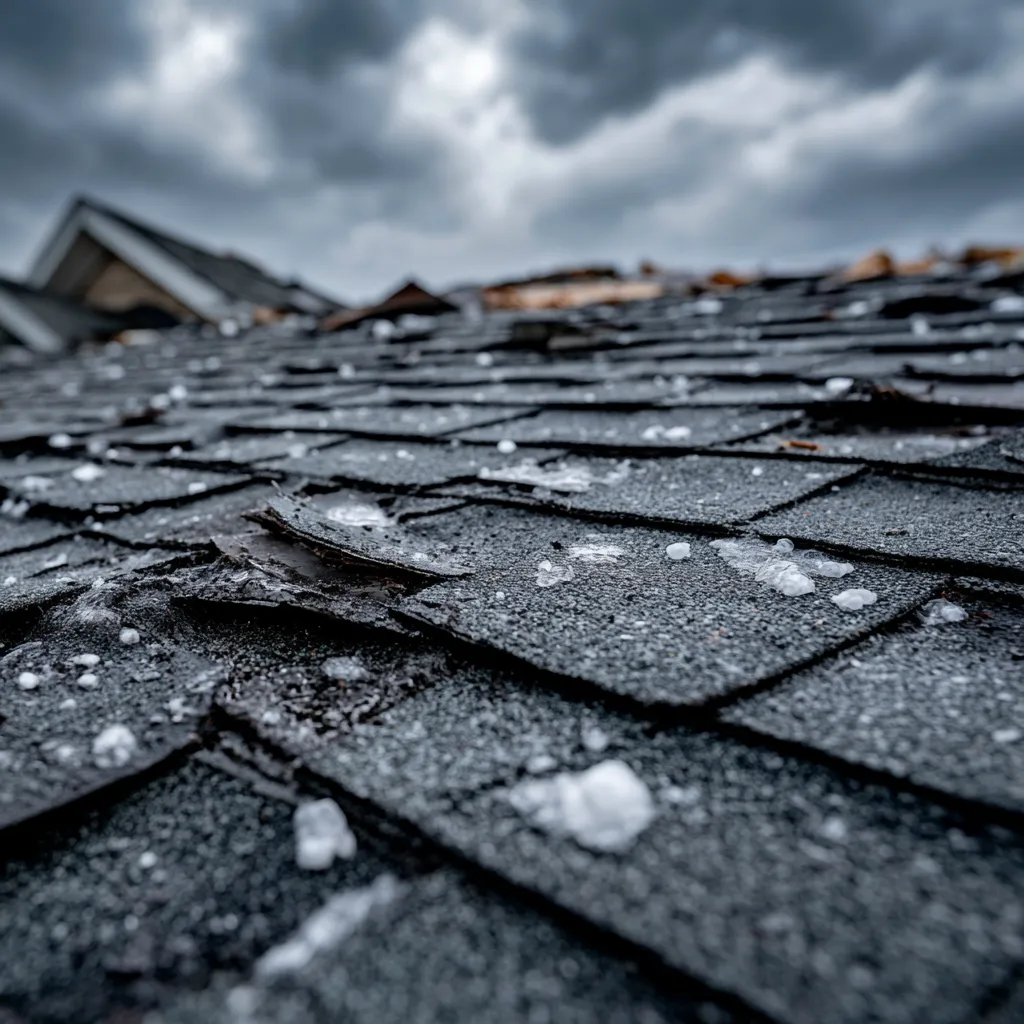
A roof claim is filed in your name and settled by your carrier, and nobody else gets to decide it. Ask Overland Park Summit Roofing before you file, and the conversation starts with the roof instead of the paperwork: hail bruises a shingle the way a ladder scuff never does, and wind creases show along a ridge long before anything shows on a ceiling. We're on the homeowner's side of this.
There's one Kansas rule worth knowing before the first estimate lands. A roofing business paid out of insurance proceeds may not advertise or promise to absorb any part of a deductible. The Kansas Consumer Protection Act treats that as an unconscionable act, so an offer to eat the deductible is an offer to break state law.
Steps a Kansas claim runs through, and who performs each one
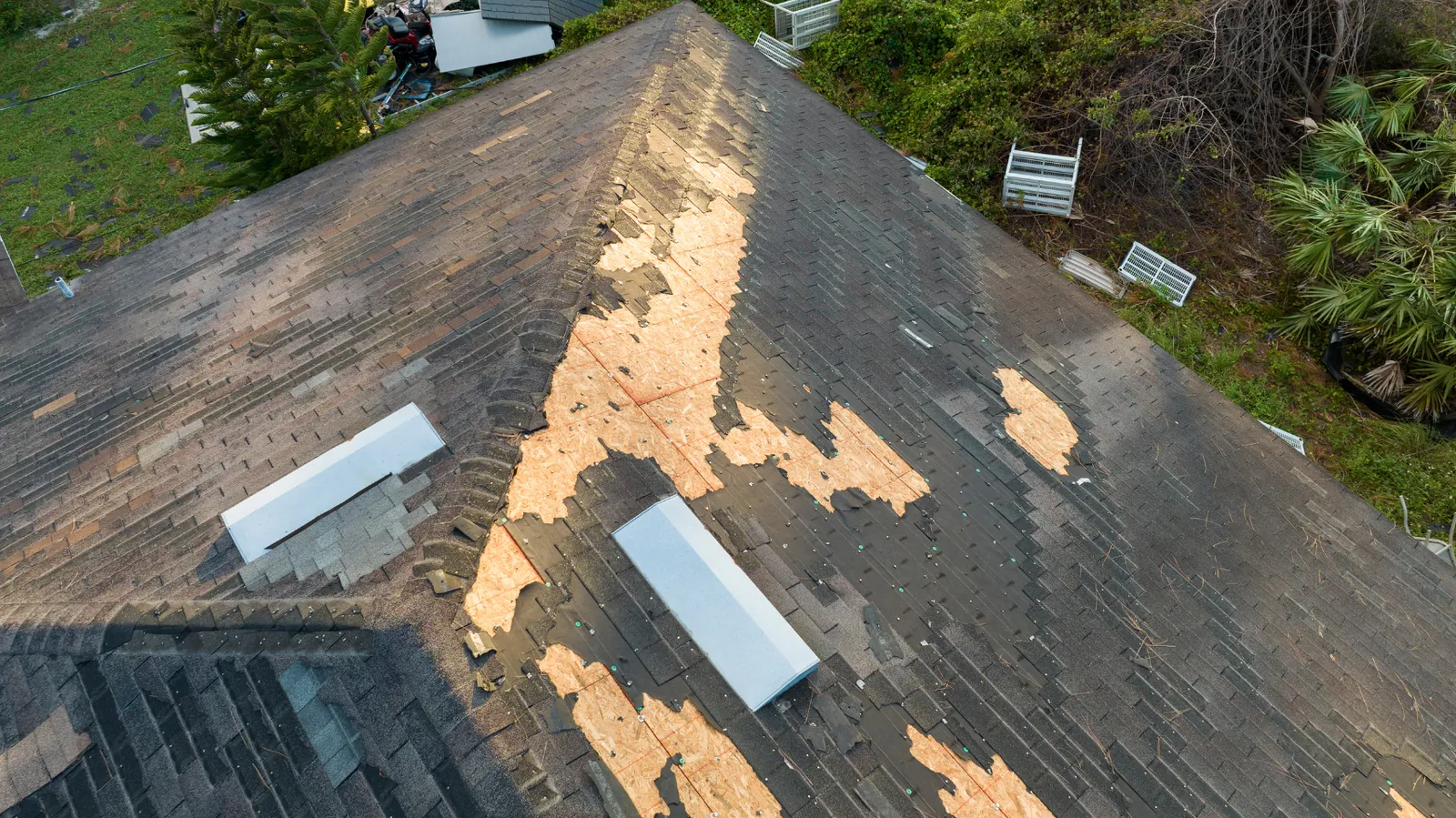
A claim runs in a fixed order, and most of it's waiting: a quiet stretch between moves, then a burst of paperwork. Every step here belongs to a named person, and only the first one is yours.
You open the claim
You call it in, write down the claim number, and pin the date of loss to a storm that happened. It opens in your name, and that's why this first move is nobody else's to make.
Your carrier assigns an adjuster
The carrier sets the inspection date and says what it wants to see when it gets to your roof. That letter's the first document in the file, and it names what the adjuster came to look for.
Our roofer works with the adjuster
Both of them stand on the same slopes and mark the same hits while the damage is still there to point at. Nothing's harder to add back later than a bruise nobody photographed that day.
Your carrier prices the loss
What comes back lists everything the carrier agrees to pay for, priced line by line, and the first check follows it. If the policy pays replacement cost, that check comes up short by the depreciation, and that's on purpose.
The final invoice releases the rest
Once the work's done the completed invoice goes back to your carrier, and the carrier releases the depreciation it held back. That last piece of paper is the one people forget, and it's the one that releases the money.
ACV against RCV, on the same twenty-year Kansas roof
Two policies, one hailstorm, one roof past the middle of its life. The wording on your declarations page decides which column you're standing in.
| Term | What it means | On a twenty-year roof |
|---|---|---|
| ACV | Replacement cost minus depreciation for age and wear, paid as a single check. | The depreciation's gone for good, so an older roof settles well under what a new one costs. |
| RCV | Replacement cost at today's prices, paid in two stages. | The held-back portion comes back once the work's finished, so age hurts the timing more than the total. |
| Recoverable depreciation | The gap an RCV policy withholds until the job's complete. | Released against the final invoice and proof of completion, which is why the last piece of paperwork is worth chasing. |
| AOP deductible | A flat amount applying to most perils, commonly somewhere between $500 and $2,500. | The same figure whatever the roof's age, and it comes off the first check. |
| Wind and hail deductible | Often a percentage of the Coverage A dwelling limit, typically 1% to 5%. That's a percentage of the home's insured value and not of the claim. | On a higher-valued house this can run several times the flat deductible people expect. |
Ranges here come from industry references (NAIC on ACV and RCV, the Insurance Information Institute on percentage deductibles). None of them come from your policy. Your declarations page is the only document that says what yours does.
Documentation for an Overland Park roof claim, gathered before the adjuster's visit
The folder does the arguing. Paperwork's far easier to collect now than to reconstruct after a partial denial, and hail damage is easiest to prove while it's still on the roof.
- Dated photos of every damaged slope, plus the interior water path from the ceiling stain back up into the attic
- The date of loss, matched against a storm logged on the Johnson County record
- Your declarations page, showing whether the policy is ACV or RCV and what each deductible is
- Receipts for tarping, drying and anything else bought to stop the damage spreading
- A full repair estimate, itemized slope by slope, with line items the carrier can price against
- Your own file on the carrier: its scope letter, the claim number, and a dated record of who you spoke to and what they said
None of this decides the claim. What it does is start your first conversation from evidence instead of memory, and that's the difference between a supplement the carrier approves and one it argues about.
Deductibles, depreciation and the 25% rule
Most of a roof claim comes down to your deductible, whether the policy pays actual cash value or replacement cost, and how long it gives you to act. All of that's printed in your own policy and nowhere else.
What is the 25% rule for roofing?
Will filing a roof claim raise my premium?
Can a roofer pay my deductible for me?
What is recoverable depreciation, and how do people lose it?
How long do I have to act on a Kansas roof claim?
Photo records from an Overland Park roof stay with the homeowner
Tell us the storm date and which room the water came into, and a close look at the roof is arranged from there. Whatever that look turns up, the dated photos stay with you: for a second opinion, for the adjuster, or for a folder you never open because you've decided not to file.
Prefer to talk? Call now: (913) 210-3890
Our roofer's own workmanship warranty comes with the estimate for that roof.
A Johnson County roofer comes out to look.