Chimney Flashing Repair in Overland Park, KS
A wet spot beside the chimney usually traces to the flashing instead of the brick. That's where the repair goes.
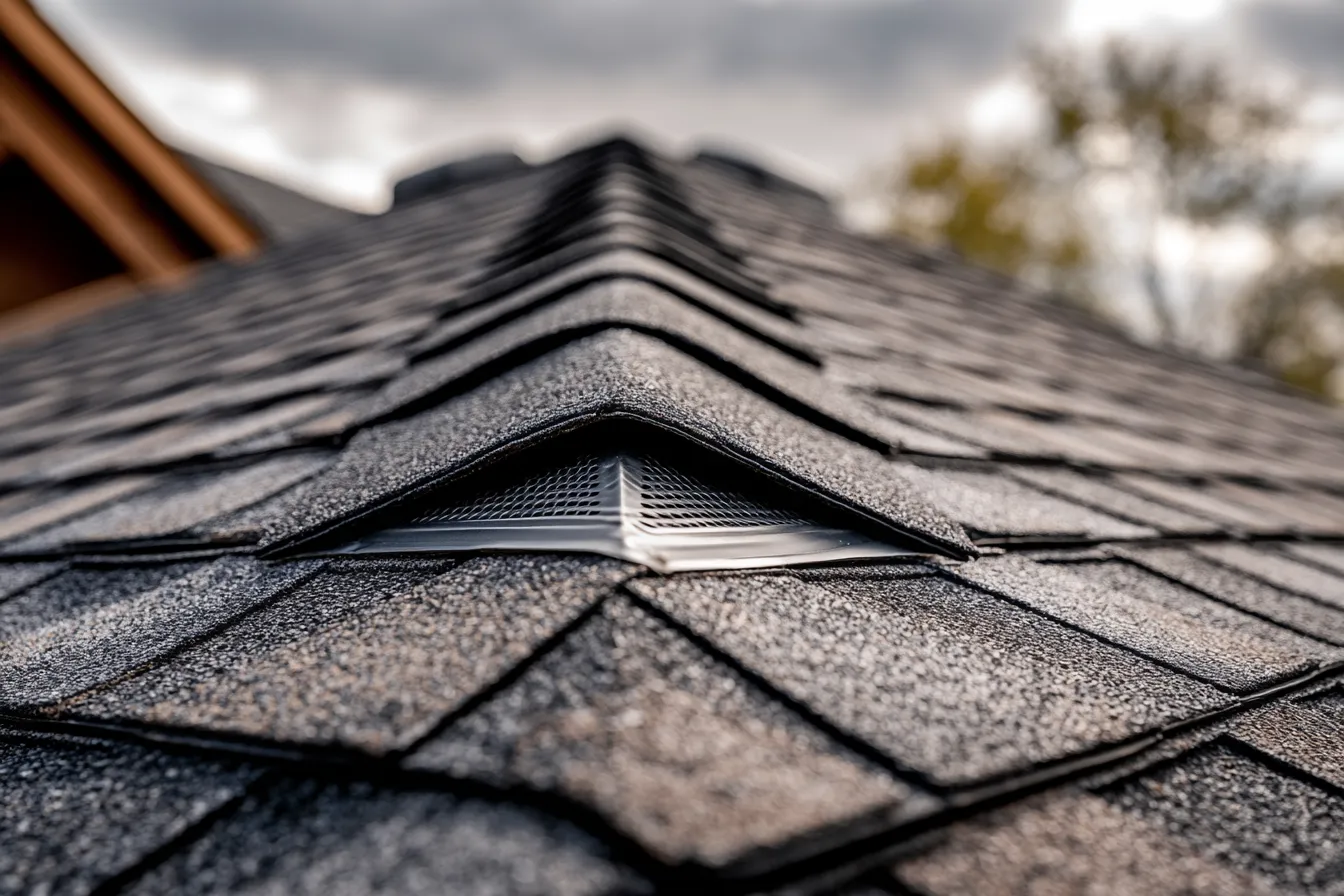
Step flashing is what an Overland Park chimney repair replaces
Water beside your chimney is a metal problem far more often than a masonry one.
Overland Park winters swing above and below freezing all season, and that movement works on the mortar joint holding your counterflashing long before it touches the stack itself.
Our roofer owns the metal; crowns, spalling brick and soft mortar belong to a mason. Plenty of these calls end with a mason's number and no roofing work. A stain well away from the stack is a different leak.
Base flashing goes on first and counterflashing goes on last
Chimney flashing is built from the bottom up, and each piece has to sit over the one below it. Get that order wrong and the detail looks finished while water walks straight through, which is how a repair that keeps coming back usually starts: it isn't the metal that failed, it's the sequence.
- ·Shingle courses cut back
- The courses around the chimney come off, and the old metal comes out with them, along with whatever sealant got smeared over it last time. How much roof has to come up depends on where the stack sits: one standing mid-slope opens on four sides, one at the ridge on three.
- ·Apron across the low side
- One bent piece runs the downhill face and laps the shingle course under it, so water coming down the slope can't get past without crossing metal. It's bent wider than the chimney and turned up the face of the brick, which sets how high everything above it sits.
- ·Step flashing up both sides
- Small L-shaped pieces go in one to a course, each overlapping the piece beneath. Step flashing is never one long strip, because a continuous piece has nowhere to shed water at each course, and that's the shortcut you'll find behind a lot of repeat leaks.
- ·Counterflashing into the mortar
- A second layer is cut into a mortar joint, bent down over the tops of the steps and sealed into that joint. That's what stops water running behind the step flashing at the brick face, and it's the piece a bead of caulk keeps getting used to imitate.
- ·Cricket on the up-slope face
- A small framed ridge behind a wide chimney splits the water and sends it around both sides instead of letting it pool against the brick. Model code calls for one once a chimney runs wider than about 30 inches, and the edition this city has adopted decides exactly where that line sits.
- ·Shingles rewoven
- The courses go back over the flashing in the order they came off, so the roof sheds into the metal instead of onto it. Counterflashing stays loose over the steps at this stage, because it has to hang free while brick and metal move at different rates.
Order is what makes the detail watertight. A piece set out of turn looks finished and leaks anyway, so the whole detail comes off even when only one face of the chimney has failed.
Sealant is a stopgap; new metal is the repair
A bead of caulk buys a season; new metal buys back the detail. Masonry and metal move at different rates through a Kansas freeze and thaw, so the sealant splits along the line it split last time, and you're paying twice for the same eight inches of joint.
You say where the water shows up
Which room, which wall, and whether the water arrives in any rain at all or waits for a hard wind. That one detail narrows the search to a single face of the chimney before anybody is on the roof.
Our roofer looks from the roof and from the attic
From above, the condition of the metal and the mortar joint holding it. From inside, the track the water left across the sheathing. A price named from the curb has nothing behind it, so the visit comes first.
You find out which trade owns it
Flashing, crown, cap or mortar. These fail in ways that look alike from the ground, and only one of them is roofing work, so the answer decides who you're hiring and roughly what you're in for.
New steps and counterflashing go into the joint
Fresh step flashing weaves in course by course, new counterflashing is cut into the mortar, and the joint is sealed. Nobody asks you to sign on the ladder: the figure you're given holds long enough to sit with it, or to set it beside another one.
Chimney flashing rebuilds and simple reseals are not the same money
National planning ranges are the only anchor this page has, and they're country-wide figures instead of a price on your chimney. What separates the cheap end from the expensive end is whether the metal is being resealed or replaced, and how much of the surrounding roof has to be opened to reach it.
If the flashing turns out to be one problem inside an older roof, what a whole replacement costs here is the other half of the decision. Either way the warranty terms are our roofer's own and are named on the estimate.
See full replacement costs- A reseal of sound counterflashing runs about $150 to $250 nationally, and it's the right answer when the metal itself still has life in it.
- Most chimney flashing repairs land between $200 and $600 nationally, with the middle of that spread nearer $350 to $450.
- A full rebuild of the metal around a chimney begins near $600 nationally and climbs with the height of the stack and the pitch under it.
- Every piece is cut and bent on site for one particular stack, so what moves the price is the state of the mortar joint and the width of the chimney more than the size of the roof.
Crickets, crowns and the questions an Overland Park chimney leak raises
Four that come up once you know the leak is at the chimney. Naming the failed piece isn't your job before you ask; sorting that out is what the visit is for.
Why does the chimney only leak in a hard, windy rain?
Is a leaking chimney a flashing problem or a crown problem?
Can the old flashing be reused when the roof is replaced?
Does fixing the leak mean rebuilding the chimney?
Sending an Overland Park chimney note, and what comes back
The stain, the weather it turns up in, and the rough age of the roof: those three answers tell our roofer which face of the chimney to look at.
If you'd rather sit on the job until spring, that's a fine answer here. When you're ready, a look at the whole roof settles whether the chimney is the only thing asking for attention.
Prefer to talk? Call now: (913) 210-3890