Emergency Roof Repair in Overland Park, KS
Water is coming in now. Before any emergency repair, catch what you can inside, photograph it, stay off the roof.
Say what is happening now. One line is enough.
Emergency roof repair in Overland Park, KS starts in the first hour
There's water on your ceiling and something hitting the floor underneath it, and every useful thing you can do in the next ten minutes is inside the house: put a bucket where the water is landing, move what it can ruin, and photograph all of it before you mop up. Then stay off the roof.
Mopping up changes what the damage looks like, so tonight's photographs are the only version anyone will ever see. If a section of ceiling is bowing downward it's holding standing water over your head: keep that room empty, pets included, and don't put a screwdriver through it to drain it. The list is the same on the third night of an Overland Park hail week as it is on a quiet Tuesday in February.
Temporary protection, and what a tarp is and is not
A cover has an order to it, and getting that order wrong is how people lose part of a claim they were entitled to. All of it happens ahead of the permanent repair, because a tarp holds off the next band of weather and does nothing else at all.
- ·Pictures of the break, before the tarp
- A tarp hides the damage the moment it goes on, so the photographs happen first. You end up holding shots of the break itself, taken from the roof before anything went over it, and they stay yours whichever way the claim lands.
- ·The tarp itself is roof work
- A tarp or a temporary membrane goes over the opening, fastened down hard enough to hold through the next band of weather. That's work for somebody with the footing and the gear for a wet slope, which is why you're reading this instead of standing on a ladder.
- ·Inside, the water has to go somewhere
- You, or a restoration company, pull water away from whatever it's ruining and get air moving over the wet material, because mold doesn't wait for the adjuster. Soaked insulation and carpet pad hold water long after the surface feels dry, so those come out instead of drying in place.
- ·Damaged material stays on the property
- Torn shingles, wet insulation and cut-out decking wait where they are until your carrier signs off on throwing them away. Hauled off early they stop being evidence, and what's left is your description of them.
- ·The permanent repair follows the adjuster
- Once your adjuster has been out and you've agreed the estimate, a roofer comes back and does the work for good. Anything the tear-off turns up after that goes to the carrier as a supplement, which is ordinary and isn't a second claim.
A standard homeowner policy asks you to take reasonable steps to keep the damage from spreading, and reasonable temporary-repair costs are covered when the loss is covered, so keep every receipt. Nobody is required to do unsafe work in the dark. If a storm put the hole there, storm damage covers the rest.
Order of work, once our roofer reaches an Overland Park property
Emergency work is two visits, and they're nothing alike. The first is short and rough, and all it does is stop the water; the second is the repair itself, and that one takes as long as the roof takes. An adjuster sits between them. A storm that opened your roof opened plenty of others that night, so plan around the order of the work and not the clock.
You say which room the water is in
Which room, how fast it's coming, and whether a ceiling is carrying weight anywhere. Nothing in that asks you outside in the dark.
Pictures first, then the tarp goes on
The break, the decking around it and the water path all go on camera before a tarp hides any of them. Then it's fastened down for the weather that's still coming.
You and the roofer split tonight from later
What holds water out tonight and what waits on the adjuster are two different lists. You settle which is which while somebody is still standing on the property.
The permanent repair happens on its own day
That waits until your adjuster has been out and you've agreed the estimate. It's a different visit and a different bill from the one that stopped the water.
Signs that this will not wait until Monday
Not every leak is tonight's problem, and knowing which one you've got saves you an after-hours bill you didn't need. Any single line here is enough to make it tonight; the rest can wait for daylight.
- Water running while the rain is still falling. A leak that keeps pace with the weather means the opening is live, and it'll go on getting worse for as long as the storm does.
- A ceiling panel sagging or bowed downward. There is weight sitting on top of that board now, and it's the only line here that can put somebody in an ambulance.
- Daylight coming through the deck where you can see it from inside the attic. If light is getting in, so is everything else falling out of the sky tonight.
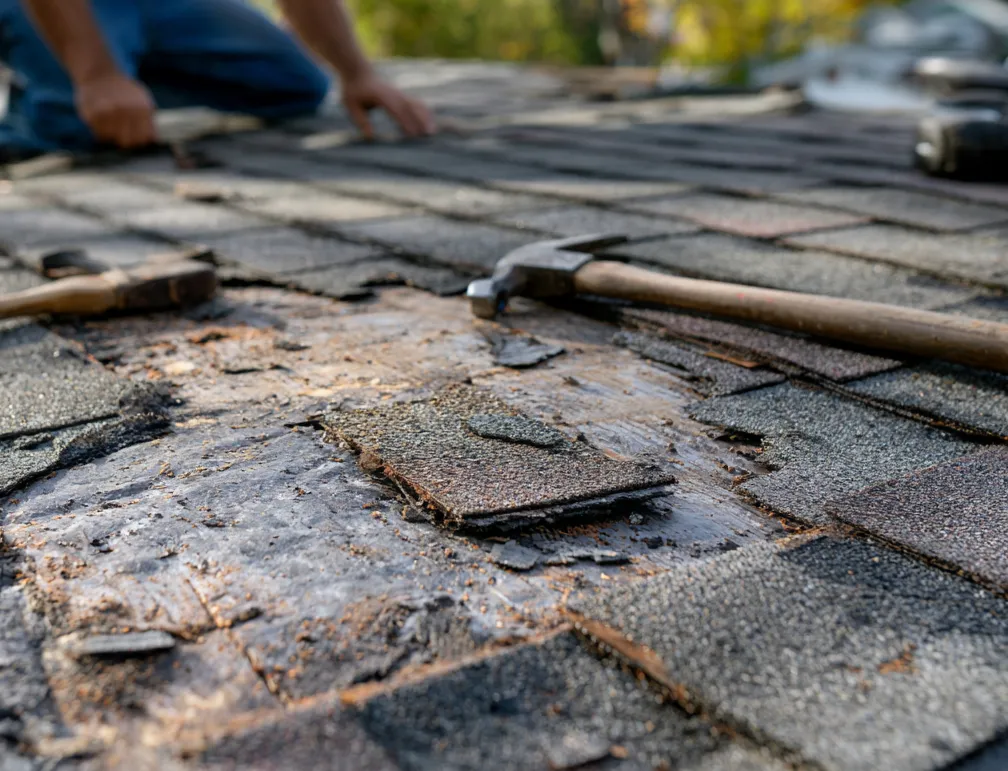
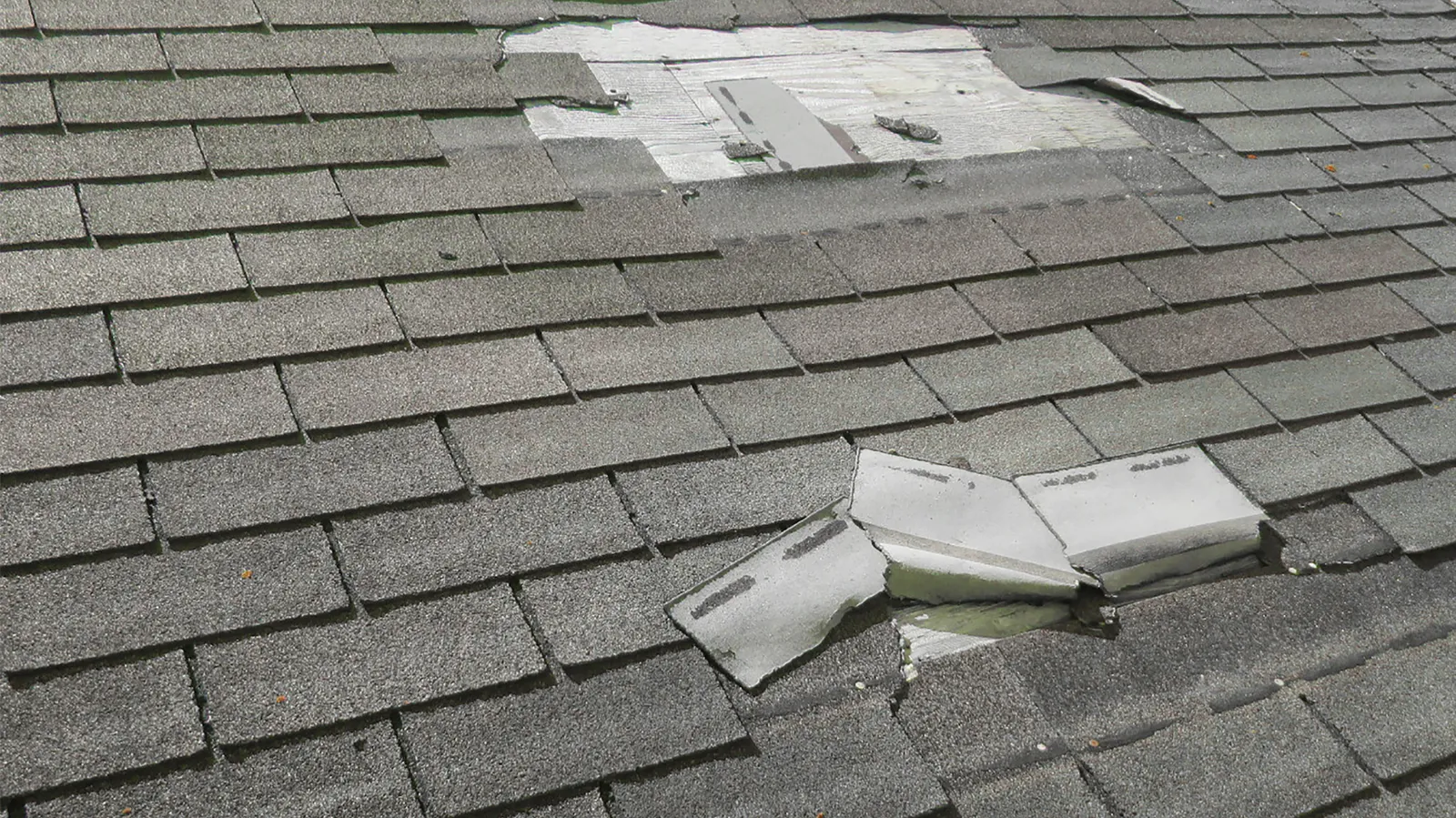
- Bare decking or torn underlayment showing where shingles used to be. Nothing is holding water off the wood there, and plywood soaks through faster than people expect it to.
- A section of roof lifted, peeled back or folded over at an edge. Wind that finds an open edge takes more of the slope with every gust after it.
- Water anywhere near a light fixture, a ceiling fan or an electrical panel. Water and a live circuit in the same ceiling means you leave the room and cut the power to it at the breaker box.
A stain that's been dry for months, a couple of missing shingles, or a drip that only shows in a hard rain is next week's job, and it belongs on the roof repair page. If the water shows up in the same spot every time and you can't work out where it starts, that's roof leak repair. None of it gets cheaper for being called in at midnight, and most of it gets more expensive.
Tarp costs, and why the number moves
What a cover costs comes down to what somebody finds when they reach the roof, and that's why the figures here are national reference ranges and never an Overland Park price. Nationally, emergency tarping runs about $0.70 to $2.00 per square foot installed, about $1.00 to $2.80 on an after-hours call, and a full professional tarp job usually lands between $400 and $1,500.
Insurance commonly covers reasonable emergency mitigation on a covered loss, which is why the receipt matters as much as the tarp does. Your carrier settles that part, and it settles it off whatever you're able to show it.
See what a full repair involves- How steep the slope is and how high the opening sits, because reaching it safely is most of what you're paying for
- How much of the roof has to be covered, since a tarp has to reach well past the break on every side to do anything at all
- Whether the call lands after hours or in the middle of the night
- Whether bare decking is showing, which changes what the tarp can even be fastened to
Kansas winter, and the Overland Park leaks that are not storm leaks
Overland Park hands you two different leaks, and the calendar tells you which. One arrives with a storm attached; the other turns up in January on a clear afternoon.
- ·Spring into early summer
- Hail. The Johnson County record carries twelve hail days in four years. South of I-435 that's usually a claim conversation, and hail damage is the page for it.
- ·Late summer into fall
- Straight-line wind takes the perimeter first. The county record logs gusts as high as 89 mph, and a creased shingle or lifted rake edge can sit quiet until the next long rain finds it.
- ·Deep winter
- The ice dam, with no storm behind it. Snow melts over a warm attic, freezes at a cold eave, and the ridge pushes water back under the shingles until it stains a bedroom ceiling. North of I-435, that's the winter call that comes in most.
Ice barrier at the eaves is one of the things an inspector looks for on a Kansas replacement. It's a code item, which is a different thing from an upsell, and it should be named on the estimate either way.
First questions when the roof is open
The five that come up while there's still a bucket on the floor. Nothing in any of these answers puts you on a ladder.
Can I just tarp it myself tonight?
Will insurance pay for the tarp?
Can the permanent repair happen on the same visit?
Who stands behind emergency work?
The ceiling is sagging. What now?

Tell us an Overland Park roof is open right now
Use the form, and say where in the house the water is showing up and whether anyone has had to move out of a room. That is the difference between a leak and a live emergency.
Prefer to talk? Call now: (913) 210-3890
A storm night opens a lot of roofs at once, and nobody here can promise you an hour. If your roof can hold until daylight, you will hear that. Sending it commits you to nothing.
Put the room and what you can see in the notes field.