Flat Roof Repair in Overland Park, KS
The flat part of your roof holds water where the rest of it sheds. The repair follows the water.
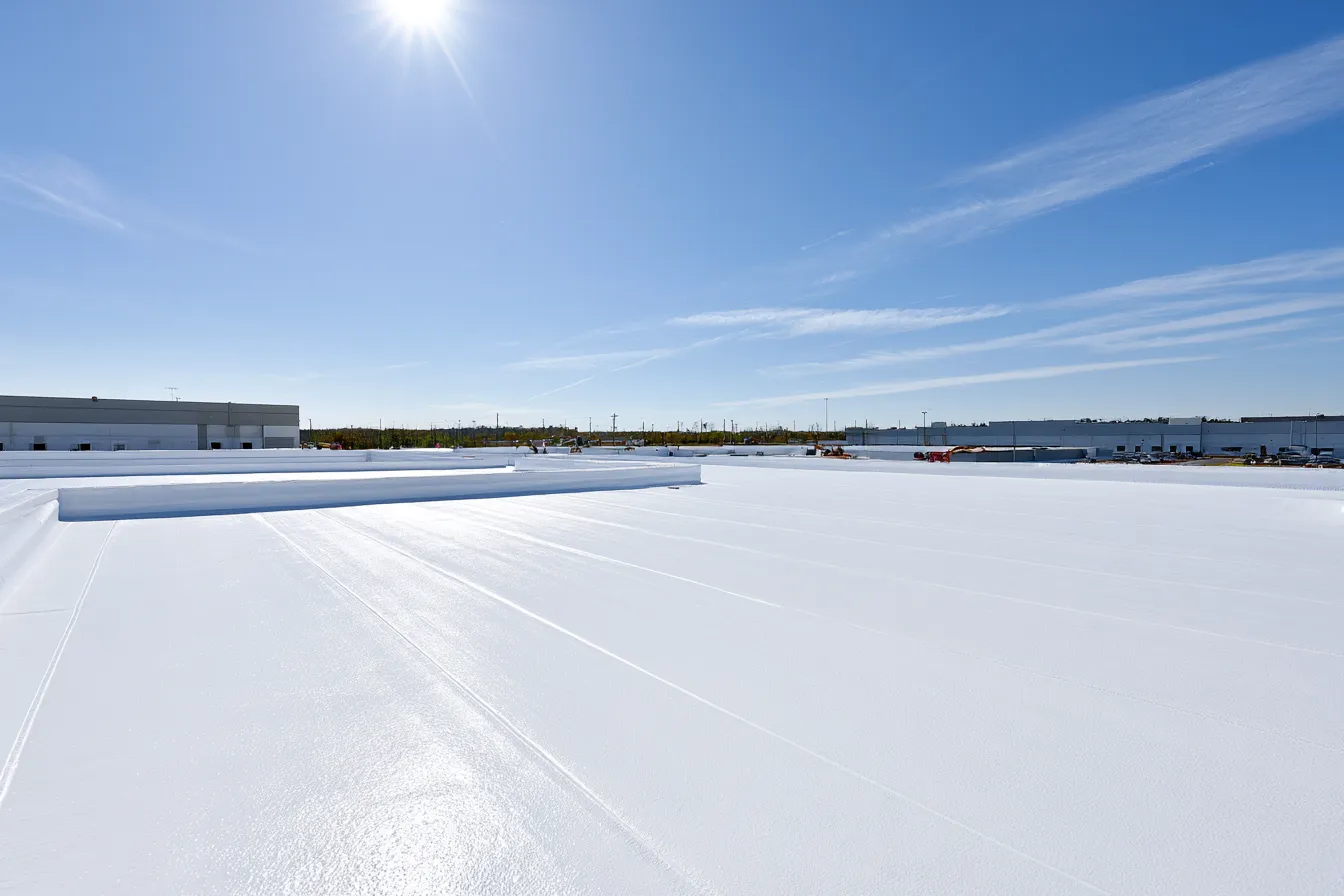
Where the stain is, how old the flat section is, and whether it's been patched before.
Seams and flashings are where Overland Park flat roof repair begins
Overland Park Summit Roofing hears about the ceiling first. A ring shows up over the kitchen, or a corner of drywall goes soft in the room somebody added on, and the part of the roof over it doesn't shed water the way the shingled part does. It holds it, and that's how you find out from underneath.
A surface that shallow holds water instead of running it off, so a seam or flashing detail that wouldn't matter on a slope becomes the whole story: water works sideways into the joint, the board underneath goes soft, and the wet patch ends up wider than the stain you're looking at.
Plenty of these turn out to be one bad seam. If the flat roof worrying you sits over a business, that's a different job at a different scale.
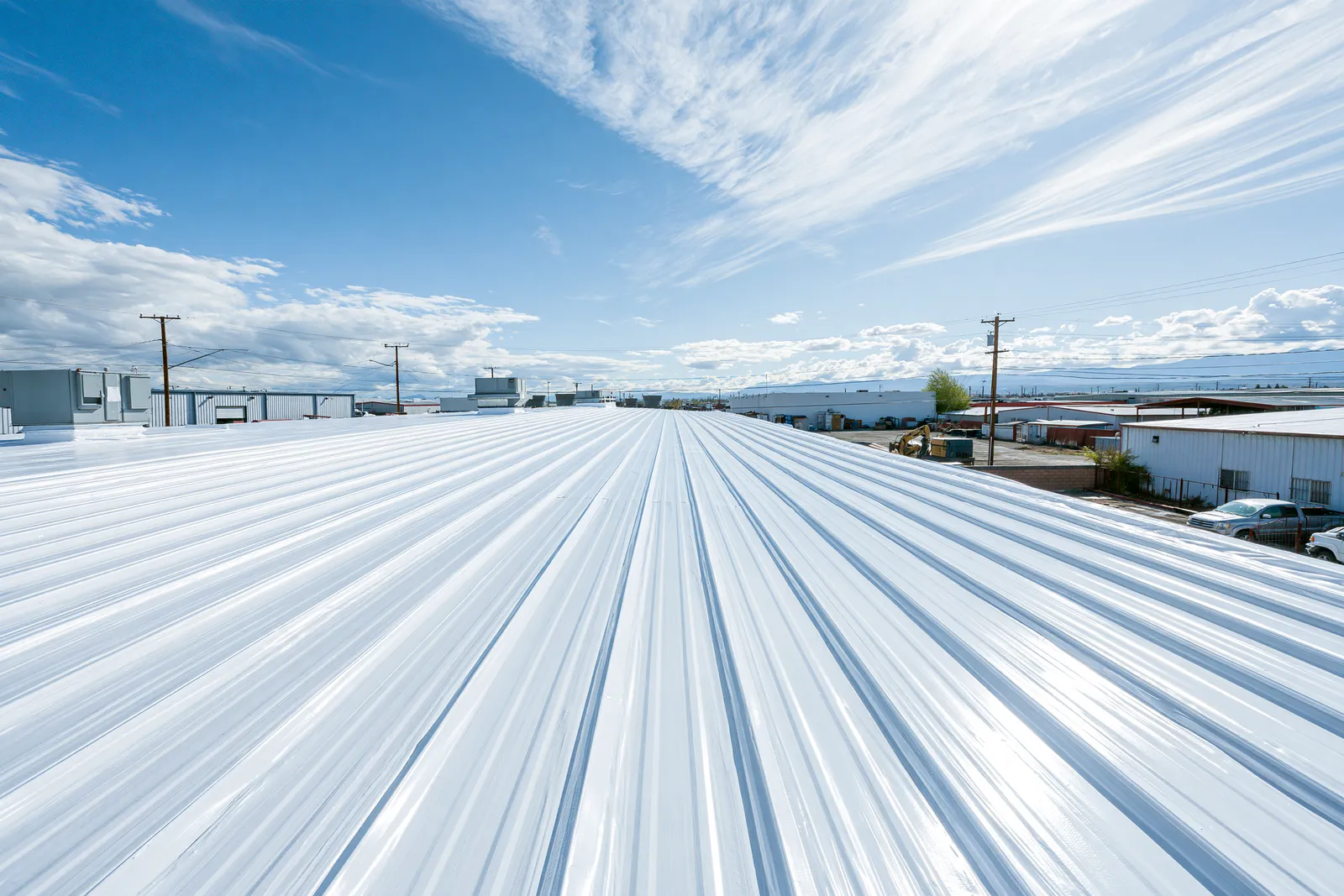
Membrane patches begin where the insulation is wet
You can't tell from the ground how far the water has traveled, so the first cut is the diagnosis. On a pitched slope the water runs before it soaks, which makes a shingle leak a different hunt altogether; up here it sits and spreads, and a joint repair and a section replacement look the same from above until the board comes out. What comes up on that first cut is what decides the price, the schedule, and how much of the section you're keeping.
Our roofer walks every seam by hand
A hand goes along each seam, each curb and each wall flashing, feeling for a lifted edge or a spot that gives underfoot. Almost none of these leaks begin in the open field, so the joints get the attention first and the wide middle of the roof gets it last.
The cut widens until the board comes out dry
You lose a broader strip of membrane than the stain led you to expect, because the wet zone almost always runs past it. Finding that early is the cheapest surprise this job has to offer.
Wet board comes out and new board goes in
Soaked insulation can't be dried in place, so you are paying for it to come out and for new board to go back at the same thickness. Any decking that has gone spongy is swapped in the same opening, and that is the one moment it is cheap to reach.
You get the weld on a dry, above-freezing day
New membrane goes over the repair and the curb or wall flashing is rebuilt where it terminates. A weld will not take on a wet or freezing surface, so a January repair waits for a workable window, and you hear that when the date is set.
Ponding water still standing days after the rain stops
Most of what tells you something is wrong up there shows from an upstairs window or from the yard, and you don't have to get on the roof to see any of it. The one worth watching is water that's still sitting in the same spot long after everything around it has dried out.
- Water that's still standing in the same low spot long after the rest of the roof has dried, usually with a dirt ring around it
- A seam that has curled, lifted or split open along its edge, where most of these leaks begin
- Soft bubbles pushed up out of the flat surface, meaning moisture is trapped in the layers below
- Flashing that's pulled back from the house wall or a vent curb, leaving a gap you can see from the yard
- Leaves and grit packed into the drain or the scupper, so the water has nowhere to go
- A ceiling stain in the room under the porch, the addition or the garage, especially one that dries out and comes back
Catch any one of these before the next hard freeze if you can. Water sitting in a low spot expands when it turns to ice, and every winter it does that, the seam opens a little further.
Wet insulation is the line between a patch and a tear-off
Nobody prices a low-slope section off a photograph, so what follows is the national picture and not a quote on your porch. Published planning ranges put most flat and low-slope repairs between about $400 and $1,900 across the country, with the average near $1,150.
Where yours lands inside that comes down to one thing: how much of the board under the membrane is still dry. You'll have the figure written down and itemized on your own estimate before you decide anything, and it says the same thing whether the answer turns out to be a seam or a whole section.
See full replacement costs- Resealing an EPDM seam sits at the cheap end of this work, and on a good many roofs it turns out to be the entire repair
- A heat-welded TPO patch is priced by the square foot, which is why a long split along a seam costs more than a nail hole does
- Insulation that has gone saturated is what turns a joint repair into a section replacement, because wet board cannot be dried where it lies
- An 89 mph wind report sits on NOAA's Johnson County record, and an edge or a corner that was never fastened well is its own kind of low-slope failure
Flat sections over Overland Park porches and additions raise their own questions
Four questions come up as soon as you learn the porch roof isn't built like the rest of the house. Pitch settles the first one, and how much of the board under the membrane is still dry settles the two behind it.
Can shingles go back on a flat porch roof?
How long does a membrane patch last?
Does the whole low-slope roof have to come off?
Who warrants the repair itself?
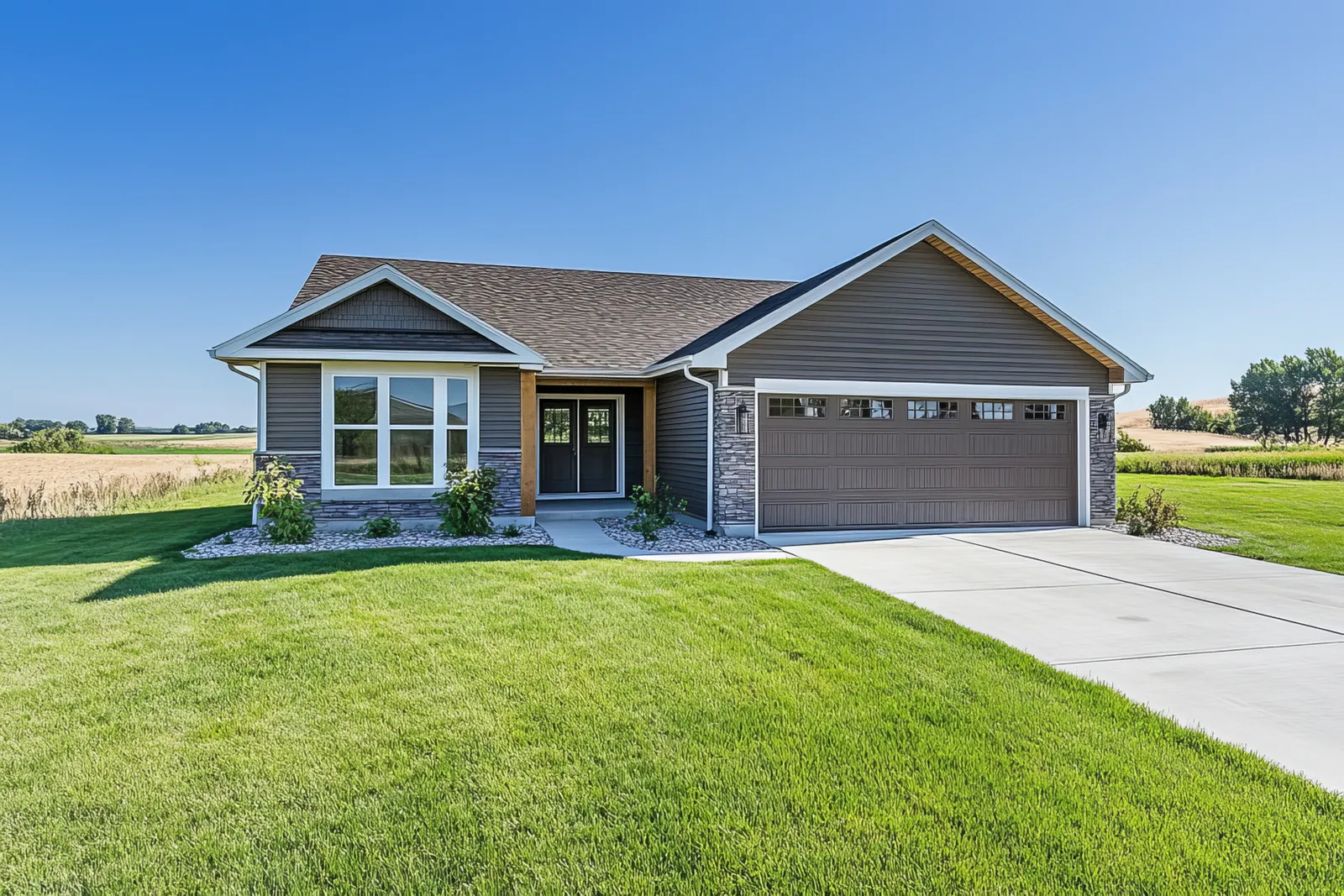
Photos from the ground start an Overland Park conversation
Send whatever you can see from an upstairs window or from the yard. Sending it books nothing and puts nobody in your driveway; the first conversation is questions, mostly about where the stain sits, how old that section is, and whether somebody's already been up there with a bucket of sealant. You can stop at any point after the first questions.
Prefer to talk? Call now: (913) 210-3890
What a low-slope repair costs comes down to how much wet board has to come out, so the number follows the cut.