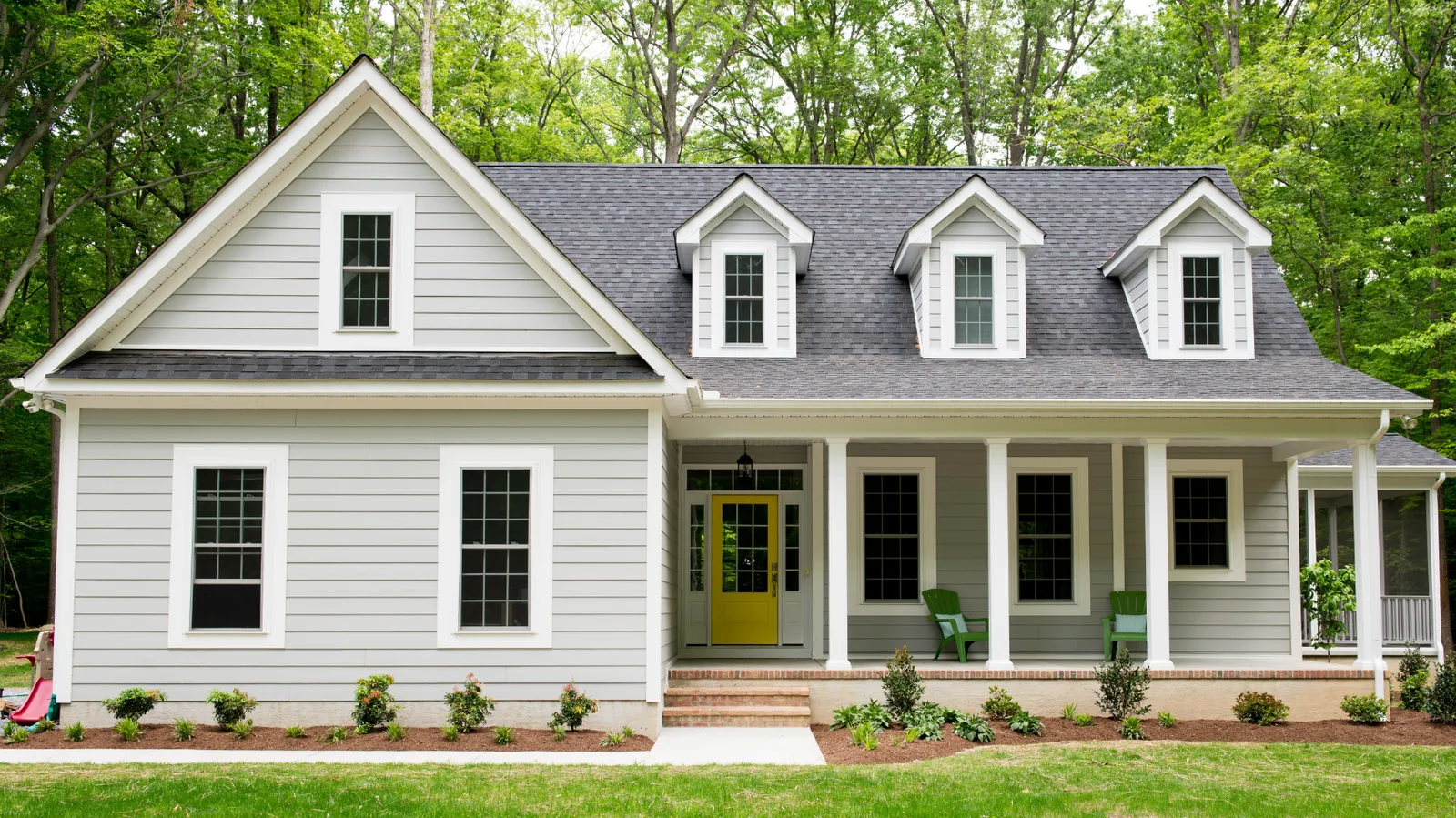
Three dumpsters have gone up on your street since April, and now somebody's at your door telling you that you're next. That's an uncomfortable place to be talked to from, and it's usually the moment a homeowner starts looking things up. The part that gets left out at the door is this: on a lot of Overland Park streets, the roofs genuinely did come due together. It has nothing to do with a salesman's route, and once you know what's behind it, the dumpster next door goes back to being what it always was, which is a fact about somebody else's house.
Overland Park grew in bursts, and so did its roofs
William B. Strang Jr. began platting subdivisions along an old military road here in 1905, but the city most people live in today is a lot younger than that. Overland Park incorporated on May 20, 1960 with 28,085 people inside 13 square miles. An annexation in 1965 nearly doubled it. By 1990 there were 111,790 people, by 2010 there were 173,250, and today it's somewhere around 197,000.
Those are figures about people, and people need houses. A city that adds most of its housing in a handful of pushes ends up with whole subdivisions framed inside the same two or three construction seasons, by the same builders, out of the same materials at the same prices. Everything on those houses starts its clock in the same season. Furnaces, water heaters, driveways and roofs. They're all on the same calendar.
A covering has a service life, and the street shares it
Asphalt roofing is a wear product with a known working span. The life-expectancy study prepared for the National Association of Home Builders puts asphalt roofing at around twenty years, and that figure moves with the weather a roof took, with how it was installed, and with how well the attic underneath breathes. Treat it as a planning number, because it isn't a due date. Some coverings are worn out at fifteen and some are still sound at twenty-five, and you don't know which one you've got from the curb.
Now put a twenty-year wear product on two hundred houses inside the same eighteen months. Twenty years later that street looks like it's holding a coordinated event. What it's holding is a math problem, and every house on it is working the same sum.
The three pushes you can still see from the car
You don't need a map to follow the growth arc. The city grew in moves you can still see from the car, and it filled in behind each one.
- The 1960s core. The city that incorporated in 1960, plus the 1965 annexation that nearly doubled it. Most of these houses are on a third or fourth covering by now, and what the tear-off finds under the shingles is the part nobody can price from the ground until it's open.
- The 1985 ring. Stanley came into the city on May 8, 1985, roughly eight square miles carrying about a thousand residents at the time. The subdivisions that filled in behind that line are mostly working through a first or second replacement today. That's the wave a lot of these streets are in right now.
- The 2008 southern edge. A third annexation took in territory south of the existing city limits, effective March 10, 2008. Those are the youngest roofs in Overland Park, and they're the ones most likely to still be original.
What the dumpster next door tells you, and where it stops
So your neighbor's dumpster is information. It says a house built around the same time as yours reached the end of something. That's worth knowing, and it's a fine reason to go find out where you stand.
What it can't tell you is what your own roof needs. Two roofs the same age can sit years apart in condition. A north slope under a big oak stays damp and grows moss, while the same slope two doors down bakes in full sun all afternoon. An attic with blocked intake vents cooks a covering from underneath and takes years off it while the shingles still look fine from the curb. Storms are local in a way that surprises people too: hail crosses one block and misses the next, so two houses that went up the same year haven't had the same weather.
Age tells you when to look. It doesn't tell you what you'll find.
What to do while your street turns over
If you're sitting inside one of these waves, the useful move is a small one. Find out what shape your covering is in, and find out what replacing it would cost, before you're deciding anything under a tarp. Those are two separate questions, and both of them have answers you can get without committing to a thing.
The first is a roof inspection, which means somebody's up on the roof: the planes, the flashing, the valleys, the pipe boots, and the attic when the evidence points inside. You should finish that visit holding photographs of your own roof and a written answer you can follow.
The second is a number. What a new roof costs in Overland Park turns on the size and pitch of the roof, the covering you pick, and whatever the deck's been hiding, and it's worth carrying a range in your head before somebody at your door supplies one for you. If the write-up says the covering is finished, a full replacement becomes a planned project with a start date, and that's a much better place to be than an emergency.
And if it says you've got years left, that's an answer too. A covering with five good years in it is worth five more years.
If your street's in the middle of one of these turnovers, the question worth settling is where your own roof sits in it. Send that question to Overland Park Summit Roofing, and our roofer gets on the slopes at no charge, so you'll know which wave you're in and what your own covering still has left.
See where my roof stands