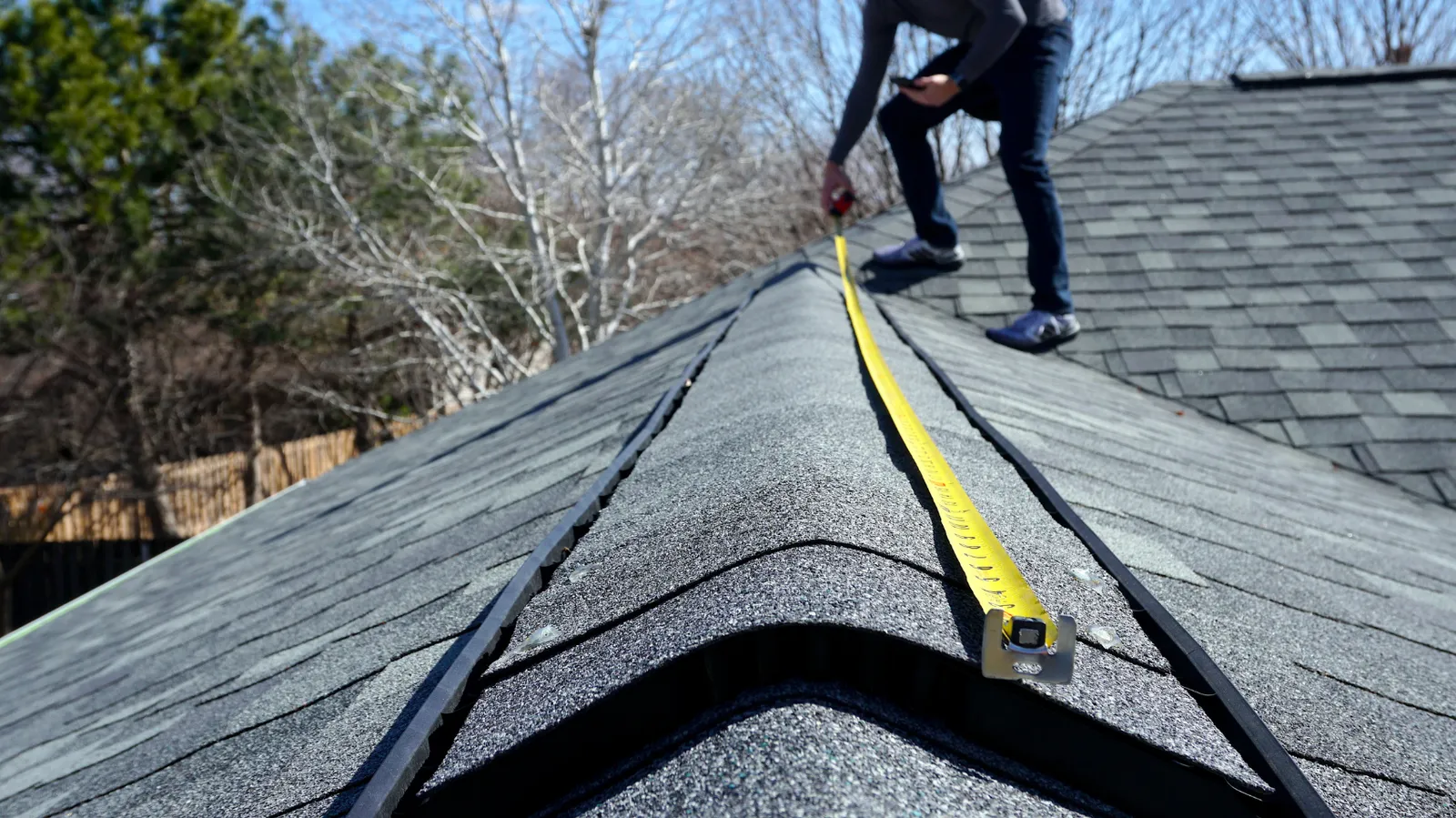
Somebody was on your roof for fifteen minutes, came down the ladder, and told you it needs replacing. You nodded, because what else are you supposed to do with that. Then the truck pulled away and you had nothing in your hands at all. The unfair part is that you couldn't tell a careful visit from a fast one, because nobody ever tells a homeowner what an inspection is supposed to produce. So here's that standard. It is worth holding any inspection to it, including one you book somewhere other than here.
Photographs of the slopes, and what comes through the roof
An inspection should end with pictures, and enough of them that you could describe your own roof to somebody who has never seen it. The planes, photographed. The penetrations too, which is the trade's word for anything that interrupts the roof surface: pipe boots, the furnace flue, bath fans, the chimney, skylights, the seam where a lower roof runs into a wall. Water finds its way in at those joints far more often than through the middle of a slope, so those are the photographs you'll care about six months from now.
Expect the close ones as well as the wide ones. A wide shot of a slope tells you almost nothing. A close photograph of a lifted shingle, a split boot, or a length of flashing that has pulled back from a wall tells you what somebody's talking about. If somebody's call on your roof is going to cost you thousands of dollars, you are entitled to see the exact square foot it rests on.
The attic, looked at from underneath
Half the evidence about a roof lives under it. A stain on the decking dates a leak far better than a stain on a ceiling can, because the ceiling only records the water that made it the whole way through. Daylight showing at a deck seam, damp insulation, rusted nail tips, a ridge vent with nothing feeding it from the eaves: none of that shows up on the shingles, and you won't hear about any of it from somebody who never opened the hatch.
Ventilation matters here more than homeowners are usually told. Intake at the eaves and exhaust at the ridge decide whether a covering bakes through August or ices up at the gutter line in January, and a roof can give out years early because nothing underneath it was moving air. How a roof breathes belongs in the diagnosis, and if the hatch is reachable and safe, somebody should be putting their head into it. If it can't be reached, that is a limit that belongs in the write-up, so you know which part of your roof didn't get looked at.
A write-up you can hand to somebody else
The most valuable thing an inspection produces is a written answer in the kind of language you'd use yourself: what's wrong, where it is, how urgent it is, and what your choices are. A quote answers a different question and it is a different document. The write-up is the one you keep.
The test for a good one is whether it survives leaving your house. Hand it to your spouse, your neighbor, or a second roofer, and watch whether they can follow it without you translating. If they can't, it wasn't written for you. Four bullet points and a total at the bottom is a page written for a signature.
The boring outcome has to be available too. Sometimes the answer is that the roof has five good years left and needs one boot replaced, and a repair is a legitimate ending. An inspection that can only ever land on a replacement wasn't an inspection.
The number, and what the visit itself costs
If what they found points at work, a figure should come attached to it, itemized enough that you can see what each part of it buys. Which material is going on the roof. What happens if the decking underneath turns out to be soft, priced by the sheet ahead of anybody finding out. What's included, and what is still conditional on something nobody can see yet.
Then there is the visit itself. A roof inspection here costs nothing, and the photographs and the write-up are yours to keep whatever they say and whoever you hire afterward. Ask about that wherever you book. A visit you pay for isn't automatically the worse deal, but you ought to know which kind you agreed to before the ladder comes off the truck.
Two things that arrive with the roofer, and neither is about the roof
Kansas requires anybody performing roofing work for a fee to register with the state Attorney General, who keeps a public roofing registration directory. Register is the accurate word and license is the wrong one, because there is no competency exam behind it. What it amounts to is a name tied to a number on a public list, and that number arrives with the roofer as a condition of working here. It isn't an errand that lands on you.
The second one is insurance, and it arrives the same way. General liability and workers' compensation both sit behind a certificate of insurance, and that certificate comes from the agent who wrote the policy instead of a folder in the truck. It shows dates that still cover the week your roof is open, and a company name matching the one on the estimate. A policy is either in force or it isn't.
None of this describes one company's visit. It's a standard, and it holds for whoever ends up on your ladder. If somebody comes down with no photographs, no attic and a total, you've learned something useful about them, and that is worth the quarter hour on its own.
Hold that list up against any inspection you book, here or anywhere else. If you'd sooner have one done than audit somebody else's, book it through Overland Park Summit Roofing. It costs nothing, our roofer does the climbing, and you'll come away holding the photographs and the write-up whatever they say.
Book the free inspection